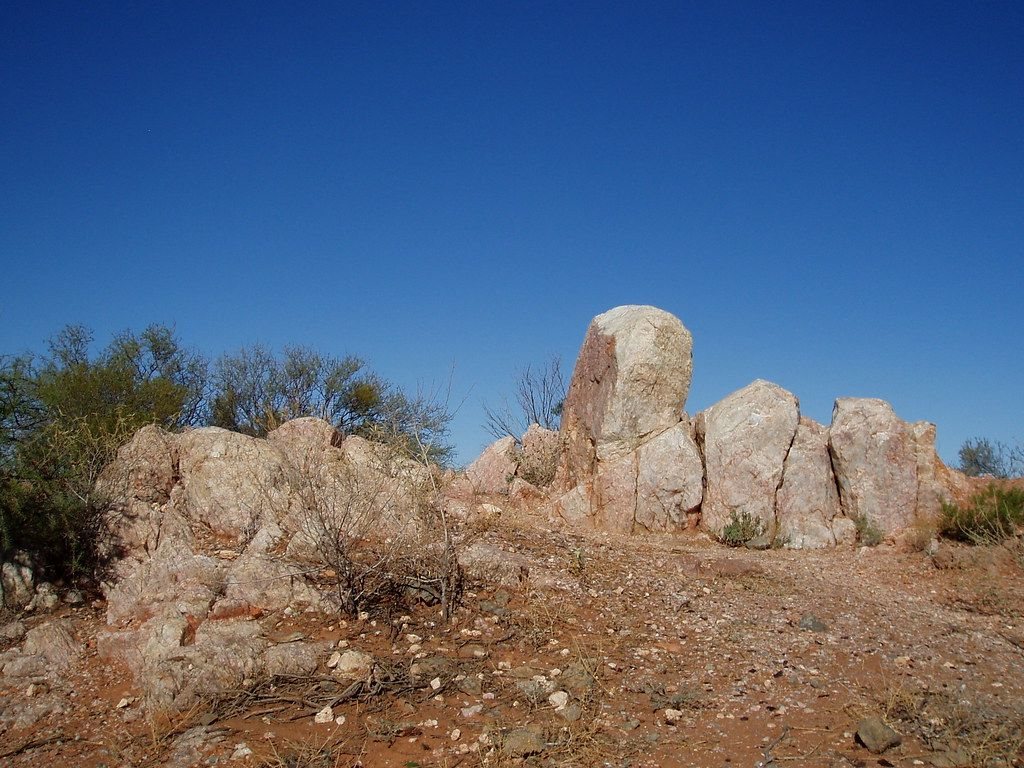
A mining city on a ridge of silver ore, sandstone sculptures on a desert hilltop, an old town on the plain, and a long road that asks for patience and planning.
The silver city
Broken Hill grew up in the 1880s on a long ridge of silver, lead and zinc ore that runs through the middle of town. Mining shaped everything here. Streets carry the names of minerals and compounds, old headframes stand above the houses, and the mullock heaps sit right beside the main streets. In 2015 it became the first city in Australia to be included on the National Heritage List.
One local detail catches many visitors out: Broken Hill keeps the time of South Australia rather than Sydney, so its clocks run half an hour behind the rest of New South Wales. Check the time zone when you book anything with a fixed start.
The city has a strong tradition of painting, too. The wide light and red country have drawn artists for generations, and you find their work in the regional art gallery and in small studios across town. Walking the older streets is worthwhile in its own right, past wide verandahs, corner pubs and miners' cottages built of whatever came to hand.
The Line of Lode and the Miners Memorial
The ore body is known as the Line of Lode, and the best place to understand it is at the top of the mullock heap that overlooks the city. Here the Miners Memorial records the names of the hundreds of men who died working the mines, along with the ways they died. It is a quiet, sobering place, and it explains the town's long history of hard work and strong unions better than any museum label.
From the top you look over the grid of streets to the plain beyond. Late afternoon is a good time to come, when the light warms the red earth and the heat has eased.
Another noteThe Blue Mountains by train and on footThe Living Desert sculptures
A short drive out of town, a reserve of rocky hills holds the Living Desert sculptures: a ring of carved sandstone pieces on a hilltop, made in 1993 by a group of artists from Australia and overseas. The setting matters as much as the work. At sunset the stone glows and the plain turns gold and then blue, and many people come up for that hour alone. The reserve also protects native plants and animals, with walking tracks below the hill. Entry fees and gate times apply; check before you go.
Silverton and the open plain
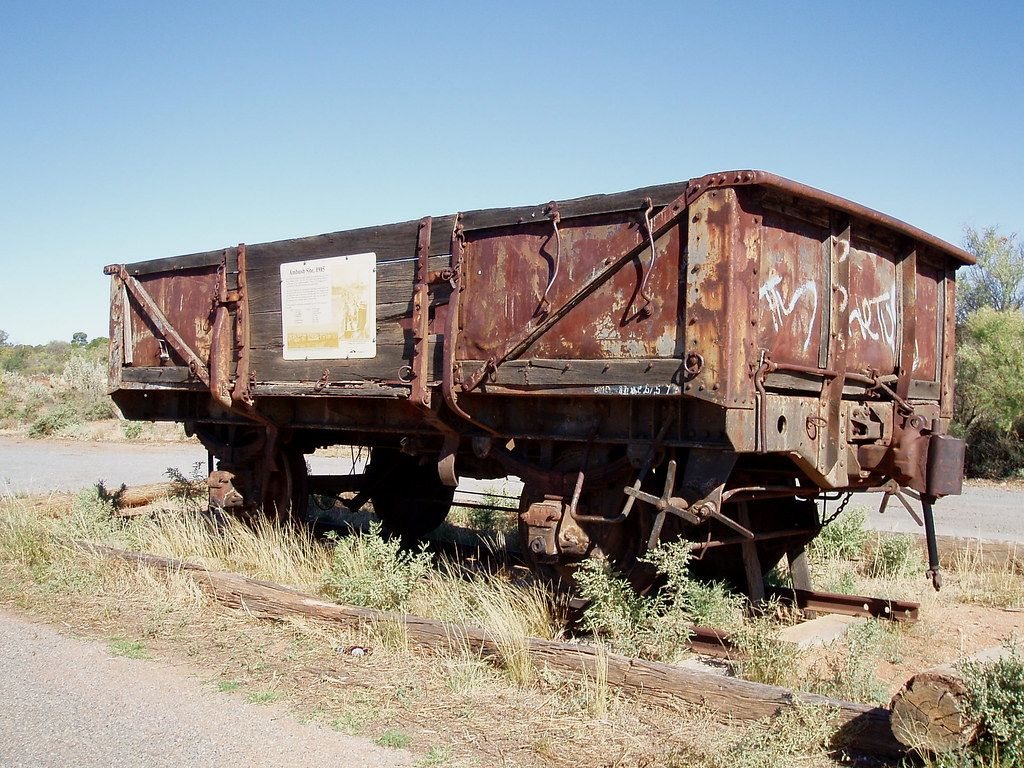
Silverton lies about half an hour's drive from Broken Hill and is older than the city. It boomed briefly with its own mines, then emptied as the miners moved to the richer ground nearby. What remains is a scatter of stone buildings, an old gaol that now holds a museum, and a few houses on a wide, quiet plain. The flat, open country around it has drawn film crews for decades.
Drive a little past the town to a lookout over the Mundi Mundi Plains, where the land falls away to a horizon so flat you can almost see it curve. Go at sunset, then drive back slowly, because this is the hour when animals move.
The long road and outback driving sense
By road from Sydney, Broken Hill is well over a thousand kilometres, usually done over two days, with the last long stretch on the Barrier Highway through Cobar and Wilcannia. A long-distance train also runs between Sydney and Broken Hill; timetables are limited and change, so check before you go.
If you drive, plan fuel stops in advance, since towns are far apart. Avoid driving at dawn, dusk and after dark, when kangaroos, feral goats and stock are most often on the road. Give road trains room: they are long and heavy, so overtake only with a long clear view, and pull over safely if one needs to pass you. Rest every couple of hours. Carry plenty of water, and if you break down, stay with your car, which is far easier to find than a person on foot. The notes on bush safety and wildlife go further, and Mungo and the sheep stations of the west make natural stops on the way.