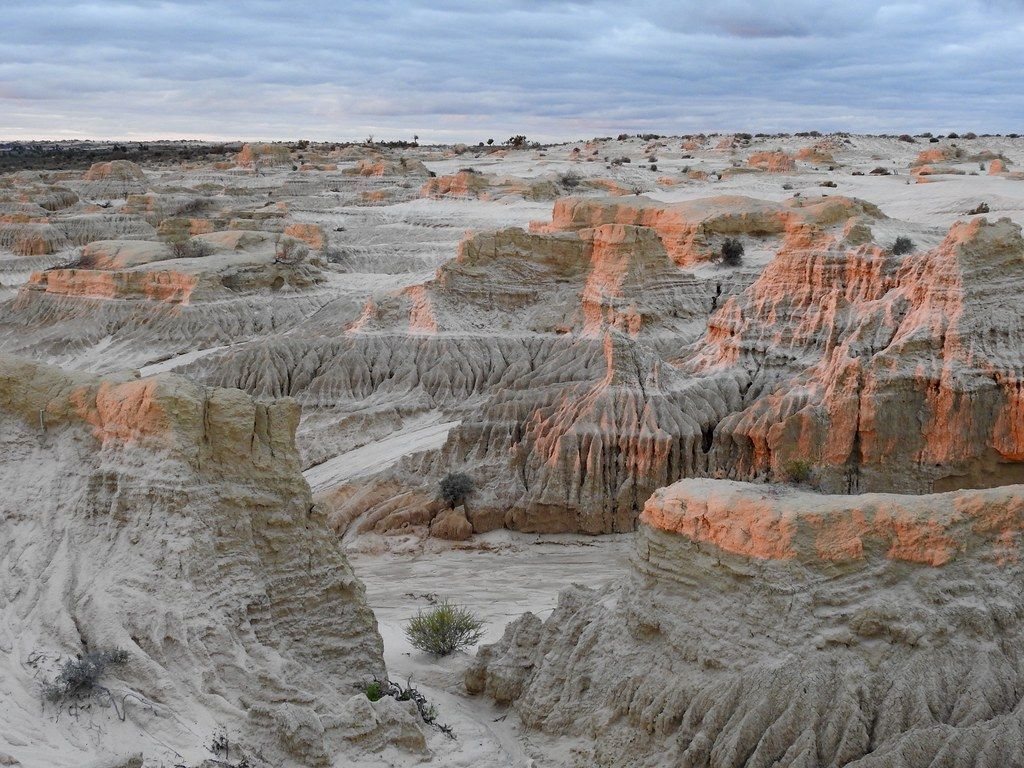
A lake bed that dried thousands of years ago, a long white dune carved into pinnacles, and a story of human life on this land stretching back some 40,000 years.
A lake that dried long ago
Mungo National Park lies in the far south-west of New South Wales, a long way from any city. Its centre is Lake Mungo, one of a chain of dry lake beds in the Willandra Lakes Region World Heritage Area, which is listed for both its natural and its cultural values. During the last ice age these lakes held water fed by Willandra Creek, and people lived, fished and camped along their shores. As the climate changed, the water slowly disappeared.
Today the lake floor is a flat plain of saltbush and bluebush, and it can be hard to picture it full. Standing on the old shoreline, you see the shape of it at once: a wide, shallow basin with a pale crescent of dune running along its eastern side.
The plain is not empty. Emus pick their way through the saltbush, red and western grey kangaroos rest in the shade of the mallee through the heat of the day, and flocks of pink and grey galahs wheel over the old shoreline at dusk. The silence is the other thing most people notice: on a still evening you can hear wind moving sand across the dune.
The Walls of China
That crescent is the Walls of China, a lunette built over many thousands of years as wind lifted sand and clay off the lake and piled it along the shore. Rain and wind have since cut the dune into ridges, gullies and pinnacles in bands of white, grey and orange that change colour through the day. Late afternoon and early morning show the layers best. The name is usually traced to Chinese workers who were employed on the station that once ran here.
A boardwalk and viewing area let you look out over the lunette on your own. Much of the dune beyond is protected, and you reach it on guided walks led by Aboriginal rangers, who explain what the shifting sand reveals. Times and availability vary, so check before you go. The erosion that makes the walls so striking also exposes fragile remains, so stay on marked paths, touch nothing and take nothing away.
Another noteThe Warrumbungles and their dark skiesMungo Lady and Mungo Man
In 1968 the remains of a young woman, now known as Mungo Lady, were found eroding from the lunette. She had been cremated in a ceremony. In 1974 the burial of a man, Mungo Man, was found nearby, his body laid out with care and covered in ochre. Both are around 40,000 years old, among the oldest human remains found in Australia, and they show that people here held ceremonies for their dead in deep antiquity.
Both have since been returned to country. The park is jointly managed with its traditional owners, the Paakantyi, Mutthi Mutthi and Ngiyampaa peoples, who are the custodians of this place and its story. Visit with that in mind: this is a living cultural landscape, not only a scenic one.
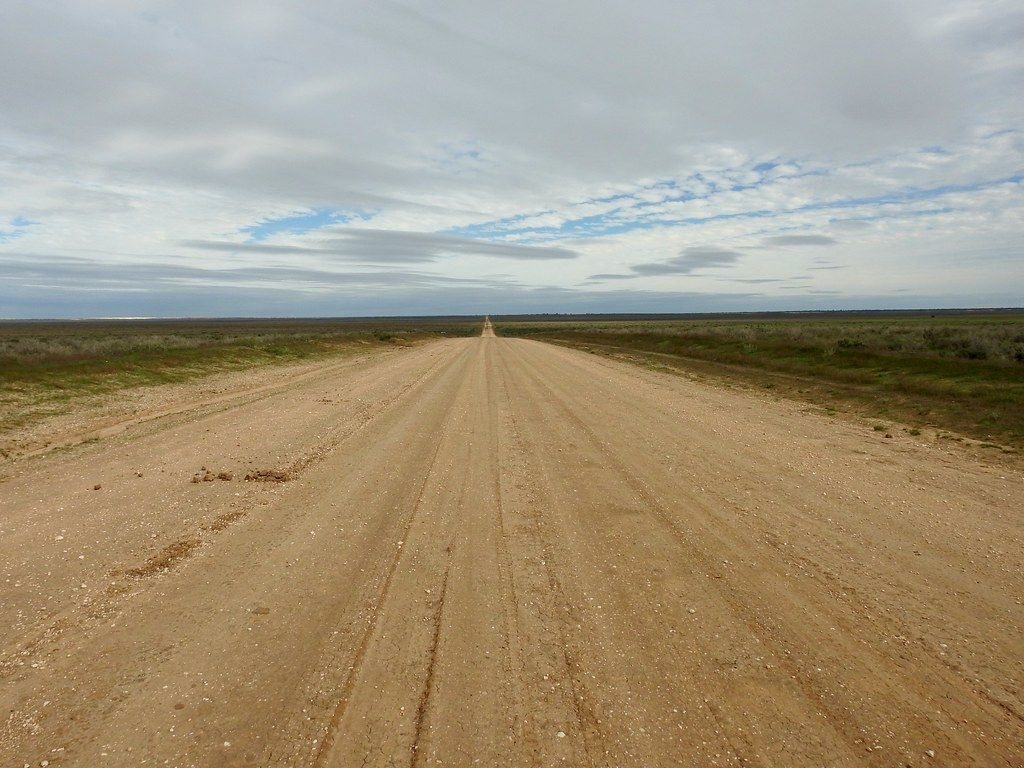
The dirt roads in
Every road into Mungo is unsealed for long stretches, whether you come from Mildura, Balranald or Pooncarie. In dry weather they are usually passable in an ordinary car with care, though corrugations and loose patches are common. After rain they close, and driving on a closed road can damage it and leave you stuck far from help. Check road conditions before you go, and again before you leave.
Fill the tank and stock up on water and food in the last town, since there is little in between. Inside the park, a long self-drive loop leads past the lunette and through mallee and saltbush country, and it is suited to dry weather only. Campgrounds and park fees apply; check before you go. Near the visitor area stands a historic woolshed from the days when this land was a sheep station, and the story of that era is told in the notes on life on a sheep station.
The cooler months are the best time to come. Summer days are very hot, while winter nights fall close to freezing, so pack for both ends of the scale. If you are driving on into the outback, Broken Hill lies to the north-west, and the notes on bush safety cover water, heat and roads.