Take the train up from Sydney, stand at Echo Point above the Jamison Valley, walk into the Grand Canyon near Blackheath and learn how fire shapes this sandstone country.
The train up from Sydney
The simplest way into the Blue Mountains is the train. Services on the Blue Mountains Line leave Sydney's Central station through the day, cross the plain past Penrith and climb onto the ridge, stopping at a string of small towns along the way. Katoomba is roughly two hours out, and Wentworth Falls, Leura and Blackheath sit a few stops either side. Fares and train times are revised from time to time; confirm them before the day.
Arriving by rail shapes the day in a useful way. The towns run along a single ridge with the railway and the highway side by side, and many lookouts and track heads sit within a walk or a short local bus ride of a station. You give up the freedom of a car, but you skip the parking and get an easy ride home when your legs are tired.
Echo Point and the Three Sisters
From Katoomba station it is a downhill walk of around half an hour to Echo Point, the lookout over the Jamison Valley. The three sandstone pillars of the Three Sisters stand off the cliff to one side, and beyond them the valley falls away into forest that runs to the horizon. This is Gundungurra and Darug country, and the Sisters carry stories that belong to those peoples. Signs at the lookout explain more.
The haze that gives the range its name is real. Eucalypts release fine droplets of oil into warm air, and on a clear day the valley takes on a soft blue tint that deepens with distance. Come early in the morning and the lookout is quieter and the light is cleaner. A cliff-top track runs along the escarpment from here, with smaller lookouts every few hundred metres. The whole area belongs to the Greater Blue Mountains World Heritage Area, listed largely for the variety of its eucalypt forests.
The Grand Canyon track and Wentworth Falls
Near Blackheath, the Grand Canyon track drops from the plateau into a narrow, fern-filled gorge where the creek has cut deep into the sandstone. The loop is roughly six kilometres and most walkers take three to four hours. It is steep, with many steps and wet rock, and it climbs back out at the far end, so keep some energy for the last stretch. On a hot day the canyon floor feels noticeably cooler than the ridge above.
Another noteBush safety and wildlifeWentworth Falls offers a different kind of walk. Tracks from the picnic area lead to lookouts over the falls and the valley, and longer routes descend stairs cut into the cliffs to reach paths along the base of the escarpment. Some of these are short and easy; others are long, exposed and demanding. Read the track grades at the trailhead, match the walk to your fitness and the hours of daylight left, and check for closures before you go, since landslips and storm damage shut sections from time to time.
Bushfire rules and a forest that regrows
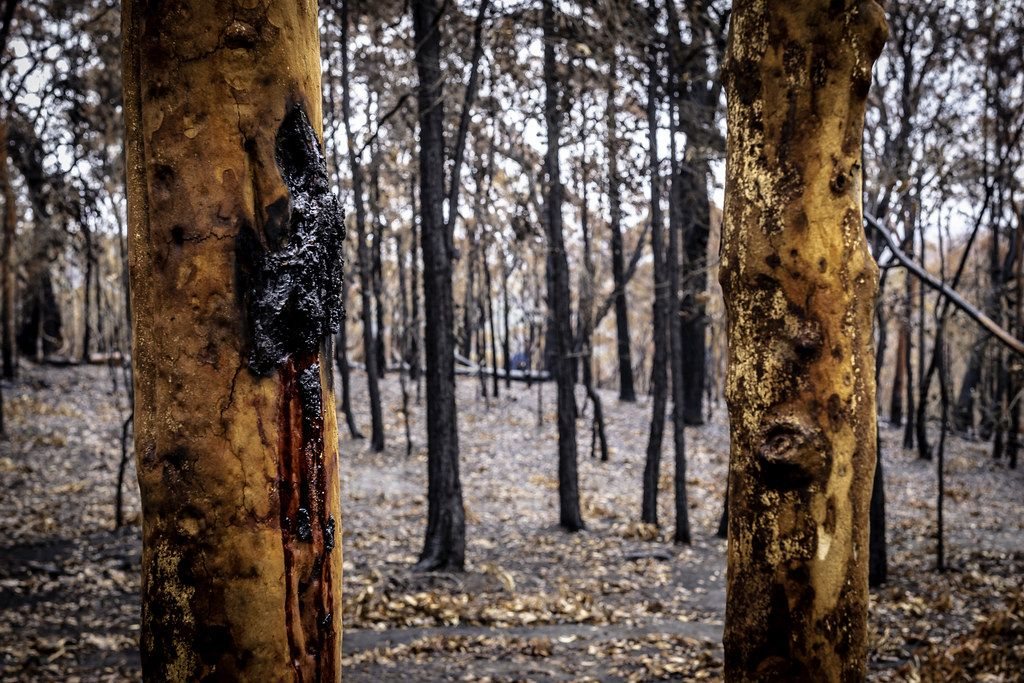
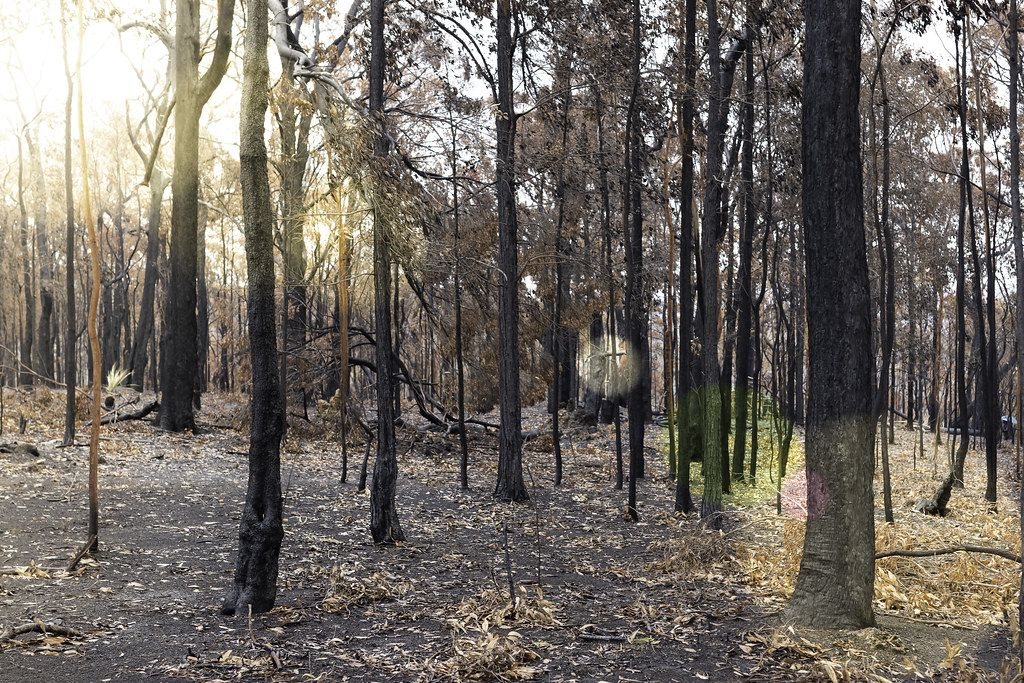
The Blue Mountains are fire country. The Black Summer fires of 2019 and 2020 burned a large share of the Greater Blue Mountains, and along many tracks you still pass blackened trunks with green shoots bursting from the bark. Eucalypts are built to recover this way, but the scars are a reminder of how fast fire moves through this landscape.
In the warmer months, check the fire danger rating for the area before you set out and follow official NSW advice on total fire bans. On days of extreme or catastrophic fire danger, parks and tracks may close, and the safest plan is to stay out of the bush altogether. Treat a closure as final, not as a suggestion. Carry more water than you think you need, tell someone your route, and turn back if you smell smoke. The notes on bush safety and wildlife cover heat, snakes and fire in more detail.
Planning the day
A single day is enough for Echo Point and one good walk, but two days let you take the trains between towns without watching the clock. The upper mountains run several degrees cooler than Sydney, so pack a warm layer even in summer. Autumn brings clear, settled walking weather; spring brings wildflowers along the cliff tops; winter can be cold and misty, with the occasional light snow on the highest ridges.
If the mountains leave you wanting wider skies and stranger rock, the volcanic spires of the Warrumbungles lie a long drive to the north-west, and the open plains of the far west lie beyond that.